Home › Articles › After memory and SSDs, AI is also squeezing printed circuit boards: the Global Electronics Association warns relief will not come before mid-2028
After memory and SSDs, AI is also squeezing printed circuit boards: the Global Electronics Association warns relief will not come before mid-2028
According to the industry association, servers for artificial intelligence, with 40-60 layer boards, are absorbing materials and production capacity: in North America PCB orders are up 56.1%, shipments only 13.3%.
After the memory crisis, the expansion of data centres for artificial intelligence risks also causing a shortage of printed circuit boards (PCBs), the boards on which the components of any electronic device, PCs included, are mounted. That is the warning from the Global Electronics Association in the report "The PCB Squeeze: A Wake-Up Call for Global Electronics", reported on Friday 20 November by The Register: demand is arriving "at a scale the supply chain was not built for" and the risk is compared to the 2021 chip crisis.
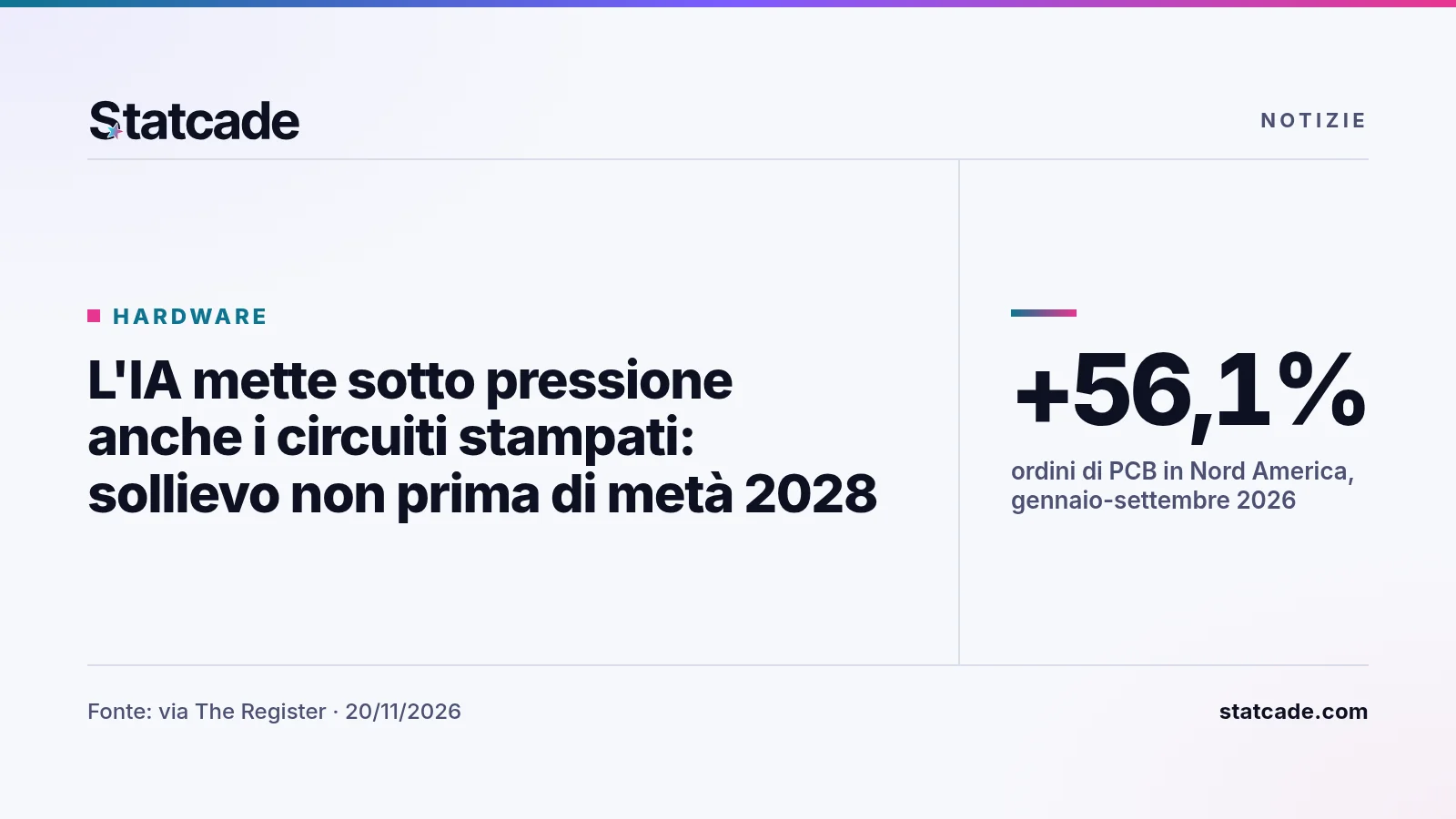
The reason is the complexity of AI server boards: a PC board typically has about 12 layers of traces, AI server boards from 40 to 60 or more, and every extra layer requires resin, copper foil and laminate. According to the report, in the first nine months of 2026 PCB orders in North America rose 56.1% on the same period of 2025, while shipments grew 13.3%. Lead times for standard FR-4 laminate went from 2-3 to 6-8 weeks in a year; in September suppliers raised laminate prices by 30% and some types of E-glass fibreglass cloth rose by 300%. Copper costs 37% more than a year ago.
Material supply will remain constrained at least through the first half of 2027, and significant relief is considered unlikely before mid-2028, despite about $10 billion invested in new factories in Southeast Asia and at least as much in China over the past three years. The sectors hit hardest, according to the association, are automotive, industrial, medical and defence. Gartner, asked by The Register, also confirms upstream material tensions for a couple of quarters.
Sources: The Register; Guru3D. Text by Statcade.