Home › Articles › Digital Fairness Act: the European Commission proposes banning paid loot boxes and pay-to-win for minors
Digital Fairness Act: the European Commission proposes banning paid loot boxes and pay-to-win for minors
The proposed regulation presented on 11 November would ban paid random reward systems and pay-to-win and pay-to-progress mechanics for minors, and would require, for everyone, the real-money value of items bought with virtual currencies and loot box odds to be shown. The text still has to go through the European Parliament and the Council.
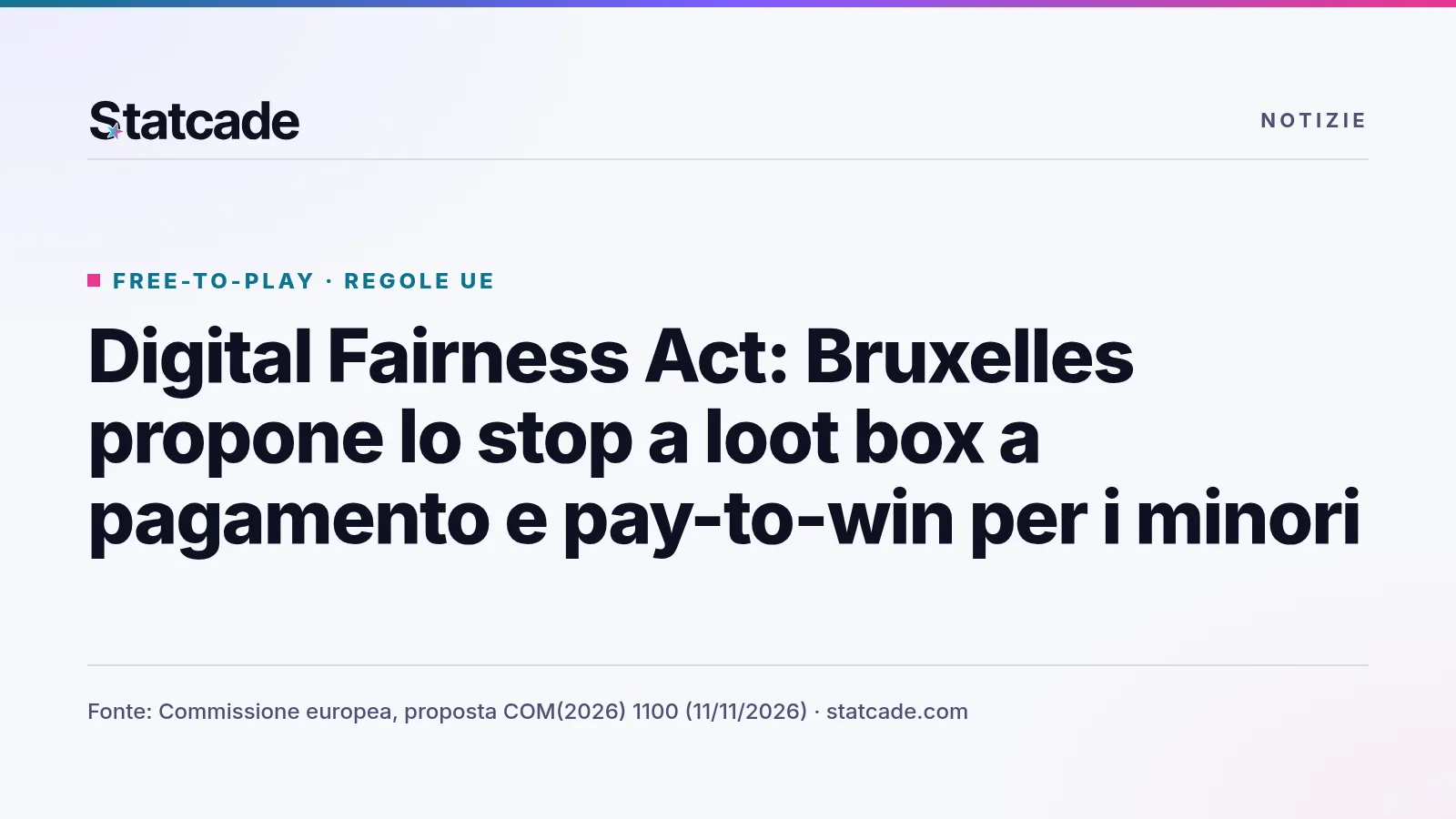
On 11 November 2026 the European Commission presented its proposal for a Digital Fairness Act (document COM(2026) 1100), the regulation on online commercial practices that closely affects the free-to-play model, on mobile as well as on PC and console. The text turns the current Unfair Commercial Practices Directive into a regulation directly applicable across the Union and introduces three articles (14 to 16) on so-called spending-maximising practices and one (17) on addictive design.
Article 14 concerns virtual currencies bought with money: sellers will have to show the monetary value, real or estimated, of items bought with those currencies. If a product is aimed at minors, or if the seller knows "with reasonable certainty" that minors use it, paid currencies will have to be disabled by default for them and can be enabled only with the approval of a parent or guardian.
Article 15 covers loot boxes and other paid "variable reward systems": an obligation to show which items can be obtained and with what probability, easy-to-find tools to switch them off and, for minors, a ban on offering them. Article 16 bans pay-to-progress and pay-to-win mechanics for minors, which the text defines as in-game purchases that are necessary, or presented as necessary, to progress or win. Article 17, meanwhile, requires traders to offer consumers who are not minors tools to switch off design features that encourage compulsive use, such as notifications not linked to a user action or penalties for not logging in.
This is a proposal: to become law it will have to be approved by the European Parliament and the Council, which can amend it. In the draft, the regulation would apply 12 months after its entry into force. According to the impact assessment cited by the Commission, the measures would reduce economic harm to consumers by 88.4 billion euros between 2025 and 2035.
Sources: European Commission, Digital Fairness Act proposal COM(2026) 1100 (Brussels, 11 November 2026) and official Digital Fairness Act page; executive summary of the European Commission's impact assessment. Text by Statcade.